
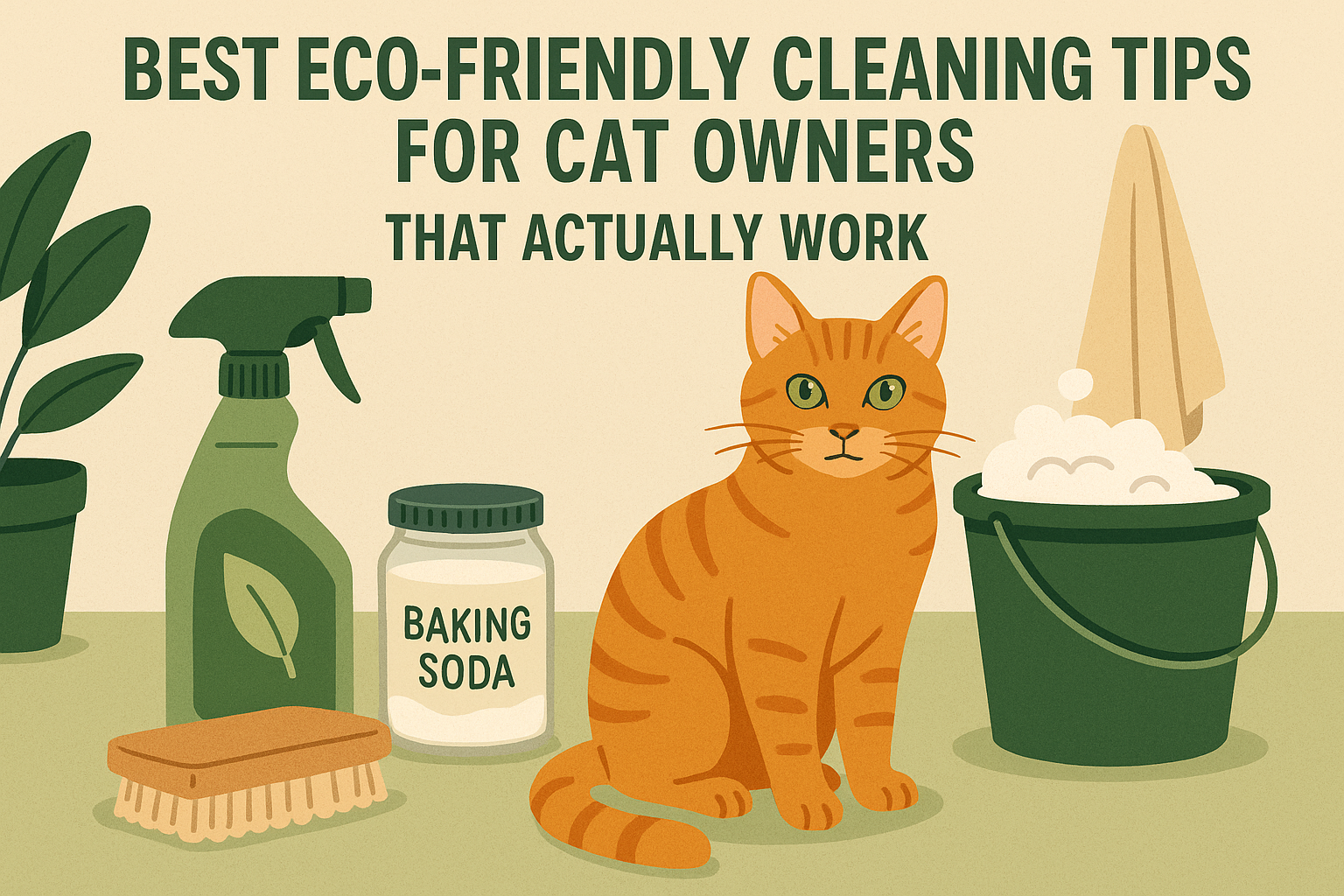
Keeping your home clean when you have a cat doesn’t have to involve harsh chemicals or expensive cleaning products. In fact, many common household cleaners contain ingredients that can be harmful to your cat’s sensitive paws, skin, and respiratory system.
The good news? You can keep your home fresh, odor-free, and safe by using eco-friendly cleaning methods that are better for both your feline friend and the environment.
In this guide, you’ll discover practical, natural, and pet-safe cleaning tips that actually work—whether you’re dealing with litter box odors, cat hair, muddy paw prints, or everyday messes.
Why Eco-Friendly Cleaning Matters for Cat Owners
Cats spend much of their day walking, grooming themselves, and lounging on your floors and furniture. If those surfaces contain harsh chemical residues, your cat may accidentally ingest them while cleaning its paws.
Using eco-friendly cleaning products helps you:
-
Protect your cat from harmful chemicals
-
Improve indoor air quality
-
Reduce environmental waste
-
Keep your home naturally fresh
-
Create a healthier living space for your family
Making small changes to your cleaning routine can have a big impact on your pet’s health.
1. Choose Pet-Safe Natural Cleaners
Instead of using chemical-heavy cleaners, switch to natural alternatives that are effective and safer for pets.
Great natural cleaners include:
-
White vinegar
-
Baking soda
-
Lemon juice (for surfaces only—keep away from cats)
-
Unscented castile soap
-
Mild fragrance-free dish soap
Avoid cleaners containing:
-
Bleach
-
Ammonia
-
Phenols
-
Formaldehyde
-
Strong artificial fragrances
-
Tea tree, eucalyptus, pine, and other essential oils that are toxic to cats
2. Keep the Litter Box Fresh Naturally
The litter box is often the biggest source of odors in a cat-friendly home.
Follow these simple habits:
-
Scoop waste every day.
-
Completely replace litter every 1–2 weeks.
-
Wash the litter box weekly with warm water and mild soap.
-
Sprinkle a thin layer of baking soda underneath fresh litter to help absorb odors naturally.
A clean litter box keeps both your home and your cat happier.
3. Vacuum Cat Hair Regularly
Cat hair, dander, and dust can quickly build up around your home.
Vacuum at least two or three times each week, paying special attention to:
-
Carpets
-
Rugs
-
Sofas
-
Cat trees
-
Curtains
-
Under furniture
Using a vacuum with a HEPA filter helps remove allergens while improving indoor air quality.
4. Wash Cat Beds and Blankets Weekly
Your cat’s favorite sleeping spots collect fur, dust, oils, and bacteria over time.
Wash regularly:
-
Cat beds
-
Blankets
-
Cushion covers
-
Hammocks
-
Soft toys
Choose a fragrance-free, pet-safe detergent and avoid fabric softeners with strong scents.
5. Remove Pet Odors Without Chemicals
Rather than masking odors with air fresheners, eliminate them naturally.
Effective odor removers include:
-
Baking soda
-
Activated charcoal
-
Open windows for fresh airflow
-
Pet-safe air purifying plants
-
Regular vacuuming
Strong sprays and scented candles can irritate a cat’s sensitive respiratory system, so it’s best to avoid them.
6. Wipe Your Cat’s Paws
If your cat enjoys supervised outdoor time or walks on a balcony or patio, gently wipe its paws before it comes inside.
This simple habit removes:
-
Dirt
-
Dust
-
Pollen
-
Lawn chemicals
-
Mud
A soft damp microfiber cloth works perfectly.
7. Switch to Eco-Friendly Cat Litter
Traditional clay litter isn’t always the most environmentally friendly option.
Consider biodegradable alternatives such as:
-
Corn litter
-
Wheat litter
-
Recycled paper litter
-
Wood pellet litter
-
Walnut shell litter
These options are often low-dust, highly absorbent, and better for the environment.
8. Clean Cat Trees and Scratching Posts
Cat trees collect hair, dust, and debris every day.
To keep them clean:
-
Vacuum once a week.
-
Remove loose fur with a lint roller.
-
Spot clean stains with mild soap and warm water.
-
Let everything dry completely before your cat uses it again.
Regular cleaning helps extend the life of your cat furniture.
9. Use Reusable Cleaning Supplies
Reduce waste by choosing reusable products instead of disposable ones.
Eco-friendly options include:
-
Microfiber cleaning cloths
-
Washable mop pads
-
Glass spray bottles
-
Reusable dusters
-
Stainless steel food bowls
These products save money and reduce plastic waste over time.
10. Create a Simple Weekly Cleaning Routine
Keeping your home clean becomes much easier when you follow a consistent routine.
Daily
-
Scoop the litter box
-
Wipe food and water bowls
-
Pick up loose fur
Weekly
-
Vacuum floors and furniture
-
Wash cat bedding
-
Clean cat trees
-
Mop floors with a pet-safe cleaner
Monthly
-
Deep clean the litter box
-
Replace air filters
-
Wash reusable cleaning supplies
-
Inspect scratching posts and toys for wear
Common Cleaning Mistakes Cat Owners Should Avoid
Even experienced cat owners can make cleaning mistakes.
Avoid these common habits:
-
Using bleach inside the litter box
-
Spraying strong air fresheners
-
Leaving cleaning chemicals where cats can reach them
-
Using essential oils around cats
-
Forgetting to rinse cleaning products from floors and countertops
Small changes can make your home much safer for your feline companion.
Extra Tips for a Cleaner, Healthier Home
Here are a few additional ways to keep your home fresh naturally:
-
Brush your cat regularly to reduce shedding.
-
Place washable mats around the litter box to trap loose litter.
-
Keep food bowls clean after every meal.
-
Use washable furniture covers if your cat loves the couch.
-
Store cleaning products securely out of your cat’s reach.
Final Thoughts
Creating a clean home doesn’t require harsh chemicals or complicated routines. By choosing eco-friendly cleaning methods, you can protect your cat’s health while keeping your living space fresh and comfortable.
Simple habits like using natural cleaners, vacuuming regularly, washing cat bedding, and choosing sustainable litter can make a noticeable difference. Over time, these small changes create a healthier environment for both you and your feline companion.
If you’re looking for more cat care tips, product recommendations, and buying guides, explore the latest articles here at Catnias—your trusted resource for happy, healthy cats.
Frequently Asked Questions
What is the safest cleaner for homes with cats?
Pet-safe cleaners made with simple ingredients like white vinegar, baking soda, and mild fragrance-free soap are generally safe when used correctly. Always rinse surfaces thoroughly and avoid bleach, ammonia, and toxic essential oils.
How often should I clean my cat’s litter box?
Scoop the litter box every day, wash it once a week with warm water and mild soap, and replace all litter every one to two weeks, depending on the type of litter and the number of cats.
Are eco-friendly cleaning products really better for cats?
Yes. Eco-friendly products typically contain fewer harsh chemicals and artificial fragrances, making them a safer choice for households with pets.
What is the best eco-friendly cat litter?
Popular options include corn, wheat, recycled paper, wood pellet, and walnut shell litter. The best choice depends on your cat’s preferences and your cleaning needs.
Can baking soda remove cat odors?
Yes. Baking soda naturally absorbs odors and can help reduce smells around litter boxes, carpets, and pet bedding without exposing your cat to harsh chemicals.


