
How Do You Toilet Train A Cat- Benefits, Negatives & Guidelines
Contents of Article
Many cat owners wonder whether they can teach their cat to use a human toilet instead of a traditional litter box. The idea is appealing—no more scooping litter, fewer unpleasant odors, and lower monthly expenses.
The good news is that some cats can successfully learn to use a toilet. However, toilet training requires patience, consistency, and a cat that is comfortable adapting to new routines. It’s also important to understand that while toilet training works for some cats, it isn’t the best choice for every feline.
In this guide, I’ll explain the benefits, drawbacks, and the step-by-step process to help you decide whether toilet training is right for your cat.
Benefits of Toilet Training a Cat
Teaching your cat to use a toilet offers several advantages if your cat adapts well to the process.
Some of the biggest benefits include:
No more buying cat litter regularly.
No daily scooping of litter boxes.
Less litter tracking around your home.
Reduced litter box odors.
A cleaner-looking home.
Less household waste, making it a more environmentally friendly option.
Many cat owners appreciate the convenience of simply flushing the toilet instead of cleaning a litter box every day.
Is Toilet Training Right for Every Cat?
Not necessarily.
Every cat has a unique personality. Some cats are naturally curious and adapt quickly to new routines, while others become stressed when their bathroom habits change.
Older cats, kittens, cats with arthritis, or nervous cats may struggle with toilet training.
Before starting, make sure your cat:
Uses the litter box consistently.
Is healthy.
Doesn’t have mobility problems.
Is comfortable with gradual changes.
Remember, patience is far more important than speed.
How Long Does Toilet Training Take?
Toilet training isn’t something that happens overnight.
Most cats need 6 to 12 weeks, while some may require three months or longer.
Always move at your cat’s pace. If your cat seems confused or starts having accidents, return to the previous step until they’re comfortable again.
Step-by-Step Toilet Training Guide
Step 1: Move the Litter Box Near the Bathroom
Begin by gradually moving your cat’s litter box closer to the bathroom over several days.
Don’t rush this step. Your cat should remain completely comfortable using the litter box in its new location.
Step 2: Raise the Litter Box
Once the litter box is beside the toilet, slowly raise it using sturdy boxes, books, or platforms.
Increase the height by a few inches every couple of days until the litter box is level with the toilet seat.
Make sure the platform is stable and doesn’t wobble.
Step 3: Position the Litter Box Over the Toilet
When your cat is comfortable jumping onto the elevated litter box, place it securely over the open toilet seat.
Keep the toilet lid open and the seat down during training.
Allow your cat several days—or longer if needed—to become comfortable with this arrangement.
Step 4: Introduce a Toilet Training Kit
Replace the litter box with a quality cat toilet training kit.
These kits fit inside the toilet bowl and contain a shallow tray filled with a small amount of litter.
Choose a sturdy training kit that can safely support your cat’s weight.
Step 5: Reduce the Amount of Litter
Gradually reduce the amount of litter in the training tray.
As your cat becomes more confident, slowly enlarge the center opening according to the instructions provided with the training kit.
Never rush this stage.
Step 6: Encourage Proper Positioning
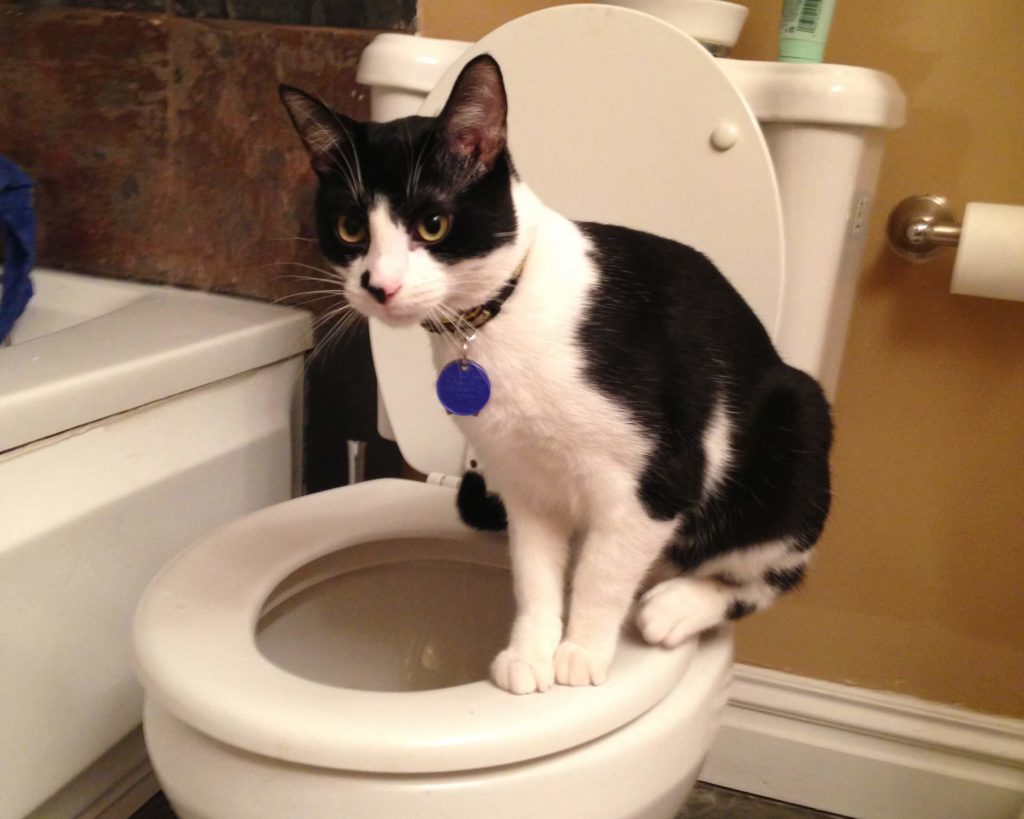
Your cat should gradually learn to balance with all four paws on the toilet seat instead of standing inside the training tray.
Reward successful attempts with praise or a small healthy treat.
Never force your cat into position.
Step 7: Introduce Water Gradually
After your cat is comfortable using the training tray without litter, slowly add a small amount of water beneath the tray.
Increase the water level gradually over time until your cat becomes comfortable using the toilet without the training insert.
Step 8: Remove the Training Tray
Once your cat consistently uses the toilet without hesitation, remove the training tray completely.
Continue leaving the toilet seat open and flush the toilet after each use to keep it clean.
Congratulations—your cat is now toilet trained!
Choosing the Right Toilet Training Kit
A good toilet training kit can make the process much easier.
Look for a kit that:
Fits securely inside the toilet.
Supports your cat’s weight.
Allows gradual progression.
Uses durable materials.
Includes clear instructions.
Avoid very cheap plastic kits that may wobble or collapse during training, as this can frighten your cat and undo weeks of progress.
Possible Drawbacks of Toilet Training
Although toilet training has its benefits, there are also some disadvantages to consider.
Many veterinarians and feline behavior experts point out that:
Cats naturally prefer digging and burying their waste.
A toilet doesn’t allow natural elimination behaviors.
It becomes harder to monitor urine and stool for signs of illness.
Older or disabled cats may have difficulty balancing.
Multi-cat households often experience more challenges.
Your bathroom must always remain accessible.
For these reasons, many experts still recommend using a clean, well-maintained litter box.
Tips for Successful Toilet Training
To improve your chances of success:
Be patient throughout the process.
Move to the next step only when your cat is completely comfortable.
Never punish accidents.
Reward positive behavior.
Keep the toilet seat up during training.
Flush regularly to maintain cleanliness.
Watch for signs of stress or discomfort.
If your cat refuses to continue, simply return to the previous stage and allow more time.
Valerie Walker’s Recommendation
As a lifelong cat owner and product reviewer, I’ve learned that every cat is different. Some cats adapt surprisingly well to toilet training, while others are happiest using a traditional litter box.
The goal isn’t to eliminate the litter box at any cost—it’s to create a safe, comfortable bathroom routine that suits your cat’s personality. If your cat seems stressed or uncomfortable during training, there’s nothing wrong with sticking to a clean, high-quality litter box instead.
Your cat’s comfort and well-being should always come first.
Final Thoughts
Toilet training a cat is certainly possible, but it requires patience, consistency, and realistic expectations. While it can reduce litter costs and make cleaning easier, it isn’t suitable for every cat.
Before deciding, consider your cat’s personality, age, and overall health. Whether you choose toilet training or continue using a litter box, the most important thing is providing a clean, safe, and stress-free environment for your feline companion.
Frequently Asked Questions
Can every cat be toilet trained?
No. Some cats adapt easily, while others never feel comfortable using a toilet.
How long does toilet training take?
Most cats require between six and twelve weeks, although some need several months.
Is toilet training better than using a litter box?
Not necessarily. Many experts still recommend traditional litter boxes because they support natural feline behavior and make it easier to monitor your cat’s health.
Should I punish my cat for accidents?
Never. Positive reinforcement and patience are far more effective than punishment.
Author: Valerie Walker
Cat Owner & Product Reviewer at Catnias | Helping cat parents choose the best products, care tips, and solutions for happier, healthier cats.


